

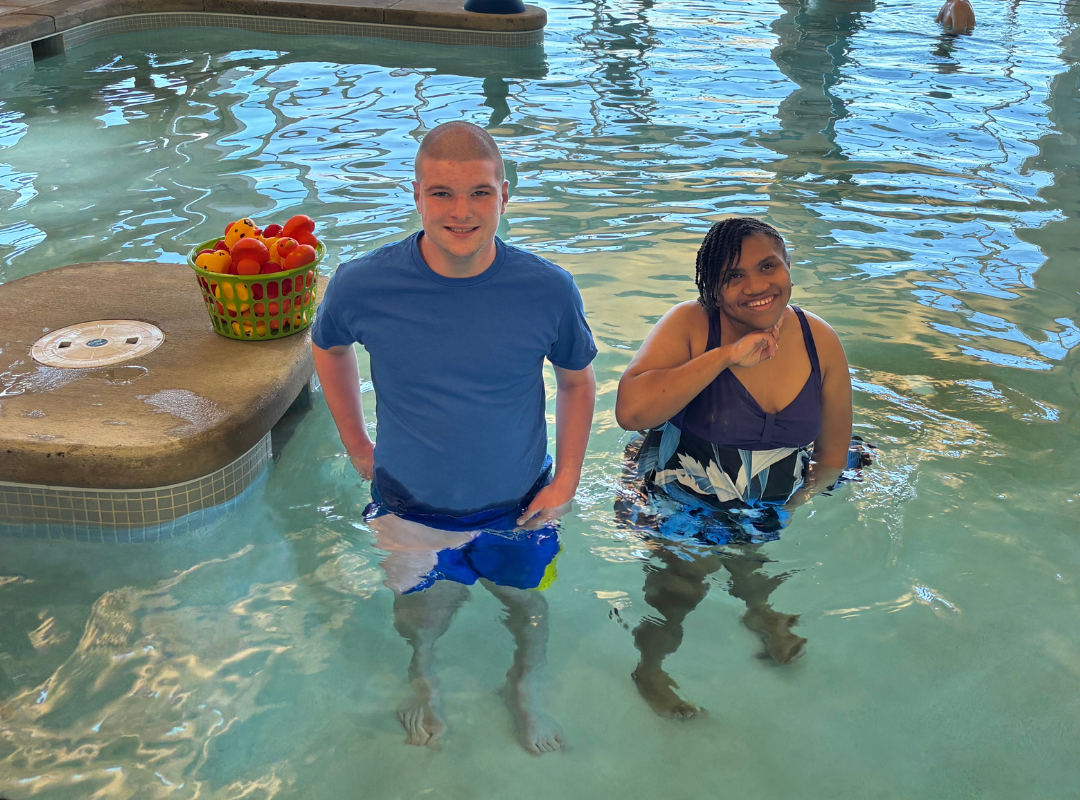
A dip in the pool is a great way to have fun and stay cool this summer. Certified water safety instructor from The Bancroft School, Cindy Burkett, shares 6 important tips to ensure everyone stays safe at swim time.
There’s nothing quite like a summer day at the pool! It’s the perfect way to have fun, stay cool, and relax, with recreational, physical, and sensory benefits for people of all ages and abilities. But while the water promises great fun, accidents can happen in the blink of an eye for children with Autism — sometimes, with tragic consequences.
At The Bancroft School, this is a very personal issue for us. Drowning is one of the leading causes of death for children in the U.S. — and the number one cause of death for children with autism. As frightening as those statistics are, it’s important to stay alert and aware when enjoying the pool, the beach or lake.
We want every child, regardless of their level of ability, to be able to enjoy the things they love – and to be able to do it safely.
“While being mindful of the dangers of swimming, I want parents to know that swim safety can be enjoyable! Children and adults with autism love swimming because of the many sensory benefits it provides. It’s a great way to get active while improving gross motor skills, balance, core strength, and endurance,” shares Cindy Burkett. Cindy is a teacher at The Bancroft School as well as a certified water safety instructor.
To address this need and create a safer world for the children in our own community, Bancroft built an instructional pool inside the Raymond & Joanne Welsh Campus in Mt. Laurel, making water safety instruction a part of our curriculum and our daily lives.
We recommend the following swim safety tips to ensure both a safe and enjoyable time in the water for your child with autism:
#1 - Signing your child up for swim lessons
Swim lessons are the most important way to prevent potential tragedy. Even if you don’t have a pool or don’t expect to spend much time in the water, introducing your child to the basics of water safety is critical. Research has shown that the odds of accidental drowning are significantly lower for children who have had at least some form of swimming instruction, and the earlier those lessons are given, the better. Organizations such as the American Red Cross offer swim lessons for children as young as six months.
At Bancroft, we focus on skills such as getting in and out of the pool safely, understanding the dangers of jumping into or running around the pool, how to float, and how to hold your breath when needed. Some children with autism or sensory processing disorders may need additional work to desensitize them to the feeling and experience of being in the water. That’s OK; find a program that fits your child’s individual needs. Many YMCA programs or swim schools offer special programs for sensory-sensitive kids.
#2 - Safeguard your home
Install secure barriers around your own home pool or hot tub – whether that means installing gates and fencing, or removing ladders and other means of access when the area is unsupervised. If you have a child with a fascination with water and a tendency to wander away, educate neighbors and friends nearby – especially those with pools of their own – so they can take the same precautions.
#3 - Actively supervise children when swimming
Avoid swimming without a lifeguard present and even then, children should be actively supervised by an adult who is in the water with them. Try to stay within arm’s reach of them at all times. Especially in open water like a lake, river, or ocean, sudden drop-offs and undercurrents can cause an emergency in an instant.
#4 - Wear life jackets
Make sure your child has a life jacket that fits properly for their height and weight for use in pools, when boating, at water parks, or whenever you’re around water.
#5 - Know how to recognize an emergency
Drowning isn’t always obvious with splashing or obvious signals for help. Every second counts – so learn the signs of distress. Keep watch of a child’s head position for their mouth if it is at water level. No forward movement can indicate they are stuck and having trouble moving. Keep your phone nearby in case you need to call 9-1-1. If you own a pool or hot tub, the Red Cross recommends keeping equipment you can throw to a swimmer or they can reach for, as well as life jackets and a first aid kit.
#6 - Keep distractions at a minimum
It’s tempting to catch up on social media or emails poolside, but parents – put the cell phone down. In the few seconds it takes to send a text, you could miss some signs or signals that could be critical.
The truth is, no matter how diligent you think you are, accidents can still happen. Following these tips can substantially reduce the risk, and help your child to safely navigate the water.
The pool should be a place every person can enjoy. Fortunately, we live in a region with plentiful resources that exist to help educate and keep our families safe around the water – including local YMCAs, the American Red Cross, and local swim clubs. Utilize those resources, and be safe!